Welcome to YiBiotech !
-
 Tel:+86 13281069756

 Tel:+86 13281069756

Provide high-quality services and products to professional pharmaceutical enterprises
Product Brief: Prefilled Dual Chamber Devices Made of Middle Borosilicate Glass
I. Product Introduction
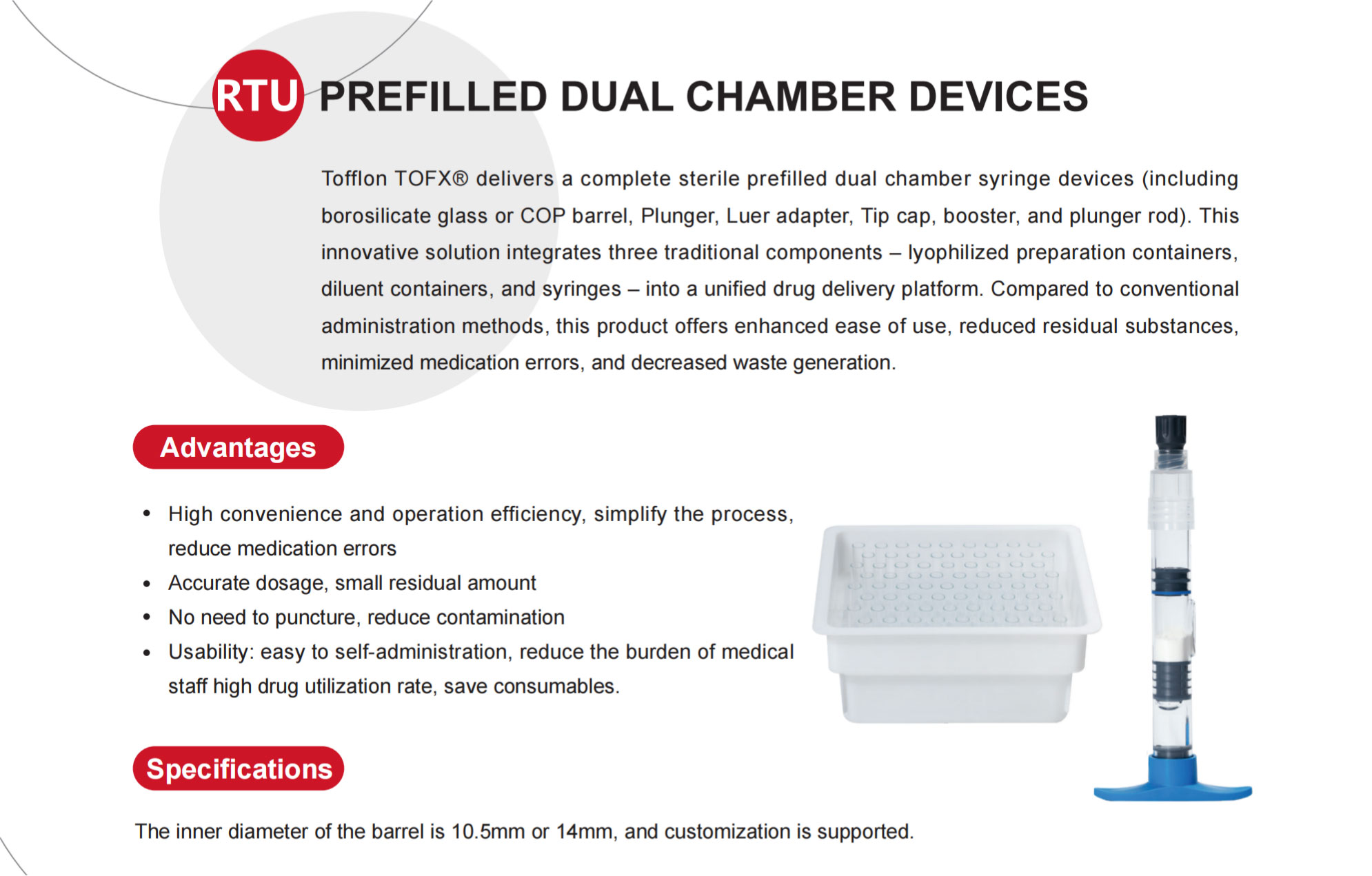
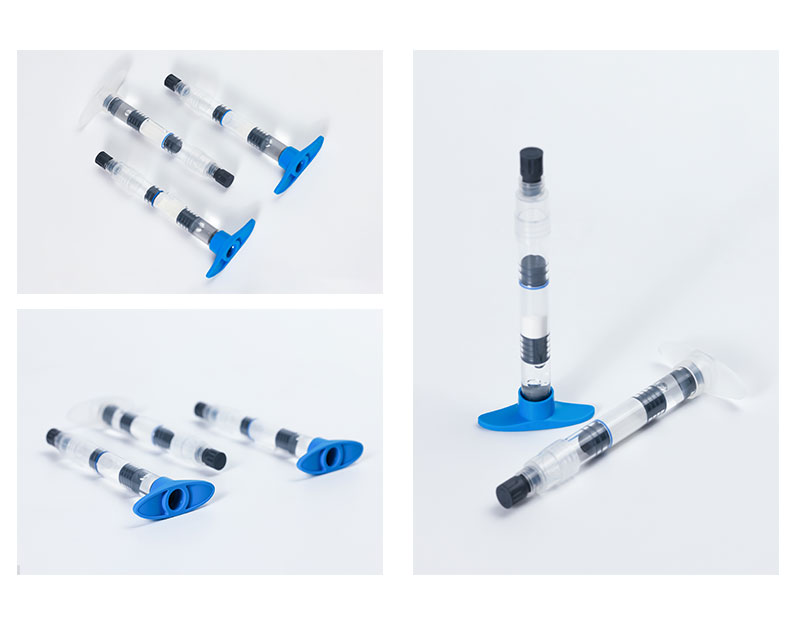
The Prefillable Dual-Chamber Borosilicate Glass Syringe System typically consists of a dual-chamber glass barrel, two pistons/stoppers, a plunger rod, and a needle shield. Its core feature is the separate storage of powder (lyophilized powder/bulk drug) and injection solvent (diluent) within two independent chambers of the same syringe. During clinical use, pressing or twisting the plunger allows the liquid to mix with the powder inside the syringe, followed by direct injection.
Material Standard: The barrel is made of borosilicate glass with high chemical stability (meeting Type I glass requirements, Hydrolytic Class HC 1), a low coefficient of thermal expansion, and tolerance to low-temperature lyophilization processes and subsequent room-temperature storage.
Structural Design: Unlike traditional single-chamber syringes, this system features two independent chambers. The front chamber (near the needle end) typically contains drug powder, while the rear chamber contains the dedicated diluent.
Sterility Assurance: Designed as a prefillable system, components are pre-sterilized (SAL 10⁻⁶) and ready for direct filling.
II. Key Advantages
Ready-to-Use, Convenient Operation
Eliminates the need to draw solution from a vial and inject it into a powder vial using a traditional syringe, thereby reducing particulate contamination risks associated with repeated rubber stopper puncturing.
Simple pressing or twisting action during clinical use completes mixing, significantly reducing preparation time and operational steps, and lowering healthcare worker workload.
Reduced Contamination and Dosing Errors
The closed system minimizes drug exposure to the environment, significantly reducing risks of microbial and cross-contamination.
After mixing, administration occurs directly within the same container without transfer, avoiding drug residue loss and ensuring dosing accuracy.
Excellent Compatibility
The high hydrolytic resistance of borosilicate glass makes it suitable for pH-sensitive or adsorbent protein-based and peptide-based drugs (e.g., vaccines, monoclonal antibodies, GLP-1 analogs).
Low risk of delamination. Compared to plastics, glass offers long-term storage stability advantages.
Regulatory Advantages for Specific Applications
The dual-chamber design is an ideal packaging format for high-value emergency drugs, biologics, and drug products requiring long-term stability.
III. Typical Applications
Biologics: Vaccines and antibody drugs that require lyophilized storage to maintain activity.
Emergency Drugs: Coagulation factors, glucagon, and other emergency medications requiring reconstitution immediately before use.
Aesthetic Medicine: Products requiring mixing of diluent with lyophilized powder, such as certain dermal filler preparations.
IV. Important Considerations
Assembly Requirements: Filling and assembly of dual-chamber systems are technically complex, typically requiring dedicated filling lines and stoppering equipment.
Compatibility: The system design (e.g., stopper penetration force, plunger rod torque) must be matched with the drug manufacturer's filling equipment and the clinical syringe driving device.